Discover your Chinese zodiac and Chinese New Year、Chinese Calendar in this place

Zodiac Animals Decoded: A Western Guide to China’s Personality Blueprint
When Westerners hear “zodiac animals,” they often think of a charming, simplified version of astrology—a cute animal assigned to your birth year that offers a few generic personality traits. This is a profound misunderstanding of one of humanity’s oldest and most sophisticated systems of symbolic psychology and temporal philosophy. The Chinese zodiac, or *Shengxiao*, is not merely a set of twelve mascots; it is a complex, interlocking framework that maps personality, predicts fortune, governs compatibility, and even structures the very flow of time itself. At ChineseFate, we believe that to truly understand the zodiac animals is to gain a powerful lens for self-awareness, relationship dynamics, and navigating life’s cycles—a lens that is remarkably pragmatic and deeply philosophical. This guide is designed for the curious Western mind, translating this ancient system into concepts, comparisons, and actionable insights you can use today.
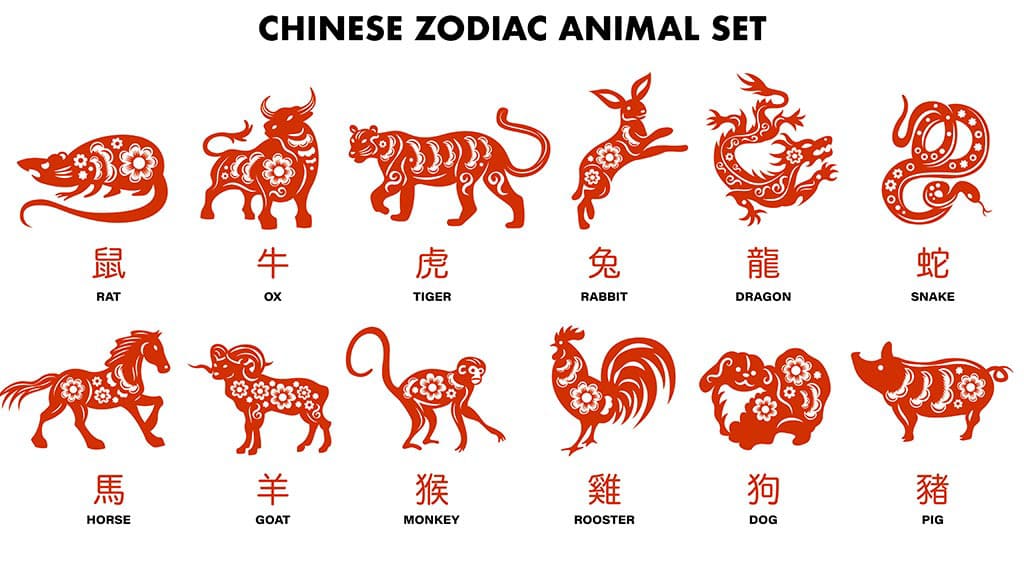
The core of the system is deceptively simple: the Rat, Ox, Tiger, Rabbit, Dragon, Snake, Horse, Goat, Monkey, Rooster, Dog, and Pig. But each animal is a archetype, a repository of centuries of observed human behavior, cultural values, and cosmological principles. Your zodiac animal is more than a sign; it’s a foundational piece of your cosmic blueprint, interacting with other forces like the Five Elements (Wood, Fire, Earth, Metal, Water) and the Yin-Yang polarity to create a nuanced portrait of potential. This article will move beyond the surface-level “you are diligent like an Ox” to explore how these symbols function as a complete operating system for life.
🐲 Zodiac Calculator
Enter your birth year to discover your Chinese zodiac animal
Beyond the Menagerie: The Zodiac as a Complete System of Destiny
To appreciate the depth of the zodiac animals, we must first dismantle the Western tendency to view them in isolation. In Chinese cosmology, everything is connected. Your birth year animal is the most accessible entry point, but it is just one coordinate on a much larger map. This map includes your month animal (your “inner self” or true character), day animal (your “secret self” or romantic nature), and hour animal (your “outward self” or how others perceive you). This multi-layered approach creates a personality matrix far more detailed than your Sun sign in Western astrology.
Furthermore, the system is dynamic, not static. It operates on predictable 12-year and 60-year cycles. The year 2026, for instance, is the Year of the Fire Horse, a combination that imbues the classic Horse traits of freedom and energy with the passionate, transformative nature of the Fire element. This means a person born in 2026 will have a different expression of the Horse archetype than someone born in 1990 (Metal Horse) or 2002 (Water Horse). The system accounts for this evolution, offering a fluid understanding of destiny that contrasts with more fixed Western models.
A Structural Comparison: Chinese Zodiac vs. Western Astrology
For Western readers, a comparative framework is helpful. While both systems seek to explain personality and fate, their underlying mechanics and philosophical roots are distinct.
| Feature | Chinese Zodiac Animals (Shengxiao) | Western Astrology |
|---|---|---|
| Primary Basis | Lunar Calendar Year of Birth (12-year cycle) | Solar Position (Month/Day of Birth) & Planetary Alignments |
| Core Components | 12 Animal Signs, 5 Elements, Yin/Yang, Earthly Branches | 12 Sun Signs, Planets, Houses, Aspects (Angles) |
| Time Focus | Cyclical, Fate as a flowing river with predictable seasons (Yearly, Monthly forecasts) | More linear/progressive, Emphasis on individual natal chart as a unique snapshot |
| Personality Model | Archetypal & Behavioral (focus on inherent traits, social role, moral character) | Psychological & Motivational (focus on drives, ego, subconscious) |
| Key Strength | Practical life advice, compatibility, timing of actions, understanding generational traits | Deep psychological profiling, understanding internal conflicts and motivations |
This table illustrates a fundamental difference: the Chinese system is deeply integrated with the lunar calendar and is inherently communal and cyclical. It’s excellent for answering questions like “Is this a good year to start a business?” or “Why do I clash with my boss?” The Western system, while also cyclical, tends to focus more on the individual’s internal landscape.
The 12 Archetypes: A Deep Dive into Behavioral Psychology
Let’s move beyond one-line descriptors. Each zodiac animal represents a cluster of core motivations, innate strengths, and classic challenges. Understanding these can be surprisingly effective for team-building, personal development, and improving relationships.
The Strategic Cluster (Rat, Monkey, Dragon)
These animals are characterized by intelligence, adaptability, and ambition. The Rat is the ultimate resourceful survivor, excelling in crisis management and seeing opportunity where others see scarcity. Think of the savvy entrepreneur or the quick-witted strategist. The Monkey is the innovative problem-solver, using charm and cleverness to navigate obstacles. They are the inventors and the persuasive salespeople. The Dragon is the visionary leader, brimming with charismatic energy and a drive to achieve grand things. They inspire others but can be imperious. In a modern workplace, a team composed of these three archetypes would be dynamic and full of ideas, but may need a grounding influence to ensure follow-through.
The Steadfast Cluster (Ox, Dog, Rooster)
This group values duty, loyalty, and structure. The Ox is the epitome of diligence and endurance, building success through unwavering effort. They are the backbone of any organization. The Dog is loyal, honest, and principled, serving as the moral compass and trusted confidant. The Rooster is meticulous, organized, and takes pride in their work and appearance, often excelling in roles requiring precision and public presentation. A team with these archetypes provides reliability, integrity, and flawless execution.
📅 Daily Horoscope
Select your zodiac sign to get personalized predictions for today
♈
Aries
♉
Taurus
♊
Gemini
♋
Cancer
♌
Leo
♍
Virgo
♎
Libra
♏
Scorpio
♐
Sagittarius
♑
Capricorn
♒
Aquarius
♓
Pisces
The Expressive Cluster (Tiger, Horse, Rabbit)
Here we find animals driven by passion, freedom, and social harmony. The Tiger is courageous, competitive, and thrives on challenge, often taking on leadership in adventurous pursuits. The Horse is independent, energetic, and craves freedom and travel, chafing under micromanagement. The Rabbit (or Cat in some cultures) is the diplomat, seeking peace, beauty, and comfort, and excels in client relations and artistic fields. This cluster brings charisma, movement, and social grace to any endeavor.
The Introspective Cluster (Snake, Goat, Pig)
These signs are often more intuitive, creative, and focused on inner worlds. The Snake is wise, deep, and strategic, possessing almost psychic intuition about people and situations. The Goat is the creative and empathetic artist, sensitive to environment and aesthetics. The Pig is generous, hedonistic in the best sense, and values pleasure, friendship, and the good life, often attracting abundance through their genuine nature. They provide depth, creativity, and humanitarian vision.
The Hidden Logic: Why These 12 Animals? The Race Myth and Earthly Branches
The popular legend of the Jade Emperor’s race is a delightful folk tale, but the true origin of the zodiac animals is rooted in ancient Chinese astronomy and timekeeping. They correspond to the 12 Earthly Branches (Dizhi), a system used to denote years, months, days, and hours. Each Branch has an associated animal, element, and yin/yang quality.
This isn’t random. The order of the animals reflects a profound observation of natural cycles and the balance of energies. The sequence begins with the Yang Rat (midnight, new beginning) and moves through a dance of Yin and Yang, aggressive and passive energies. For example, the powerful Yang Tiger is followed by the gentle Yin Rabbit, representing the necessary oscillation between force and diplomacy. This order provides a complete spectrum of human and natural characteristics, ensuring the system encompasses all possible modes of being.
Practical Application: Using Zodiac Animals in Modern Life
The true test of any system is its utility. Here is how you can apply knowledge of the zodiac animals beyond party conversations.
Career and Vocation Guidance
Your zodiac animal can point to innate talents and suitable work environments. This isn’t about limiting choices, but about recognizing where your natural energy flows most easily.
| Zodiac Animal | Natural Aptitudes | Potential Career Paths (Examples) |
|---|---|---|
| Rat | Quick thinking, negotiation, crisis management | Entrepreneur, Stockbroker, Critic, Writer |
| Ox | Endurance, systematic work, craftsmanship | Surgeon, Architect, Engineer, Agriculturalist |
| Tiger | Leadership, risk-taking, inspiring others | CEO, Explorer, Actor, Military Officer |
| Rabbit | Diplomacy, aesthetics, client care | Counselor, Designer, Diplomat, Curator |
| Dragon | Vision, innovation, public influence | Politician, Inventor, Film Director, Thought Leader |
| Snake | Analysis, research, strategic planning | Scientist, Detective, Psychologist, Philosopher |
| Horse | Action, sales, freedom of movement | Athlete, Sales Director, Travel Journalist, Pilot |
| Goat | Creativity, empathy, environmental design | Artist, Musician, Pediatrician, Landscape Architect |
| Monkey | Problem-solving, communication, technology | Software Engineer, PR Specialist, Comedian, Mechanic |
| Rooster | Organization, detail, public speaking | Project Manager, News Anchor, Judge, Fitness Trainer |
| Dog | Loyalty, justice, service, protection | Lawyer, Social Worker, Nurse, Police Officer |
| Pig | Generosity, enjoyment, humanitarian work | Chef, Hotelier, Non-profit Director, Sommelier |
Relationship Compatibility: The Four Pillars Theory
Compatibility is one of the most sought-after applications. Simple year-to-year charts (e.g., Rat and Dragon are good) are a starting point, but the advanced Four Pillars of Destiny (Bazi) analysis considers the full birth chart of both individuals. However, understanding the basic “trine” and “clash” relationships between the zodiac animals offers valuable insight.
**The Three Harmonies (Trines):** These groups share similar wavelengths. Signs in the same group understand each other instinctively.
– Rat, Dragon, Monkey (The “Water” Group: Strategic & Intellectual)
– Ox, Snake, Rooster (The “Metal” Group: Determined & Focused)
– Tiger, Horse, Dog (The “Fire” Group: Active & Idealistic)
– Rabbit, Goat, Pig (The “Wood” Group: Creative & Compassionate)
**The Six Clashes:** These pairs sit directly opposite each other on the zodiac wheel and represent fundamental tensions or challenges that require conscious work to overcome: Rat-Horse, Ox-Goat, Tiger-Monkey, Rabbit-Rooster, Dragon-Dog, Snake-Pig. A clash doesn’t doom a relationship; in fact, it can create powerful attraction and growth. But it indicates areas where communication styles and core values may differ radically. For a deeper dive into this fascinating dynamic, explore our guide on Chinese zodiac compatibility.
🎲 Lucky Numbers
Get your fortune numbers for today
Zodiac Animals and Generational Analysis: A Cultural Trend-Spotter
Because the zodiac assigns an animal to an entire birth year, it provides a fascinating tool for generational cohort analysis, similar to how the West views Baby Boomers or Gen Z. Each generation inherits the energy of its birth year animal, which interacts with the element of that year to create a collective personality.
Consider the **Millennials born in 1988 (Earth Dragon)**. They carry the Dragon’s ambitious, transformative energy, but tempered by the stabilizing, practical Earth element. This might manifest as a drive to change the world (Dragon) through concrete, systemic means (Earth)—think social entrepreneurship or tech-for-good startups. Contrast this with those born in **2000 (Metal Dragon)**—the Metal element adds sharpness, competitiveness, and a focus on structure and rules. This generation may express Dragon energy through mastering and revolutionizing established systems (finance, law, coding).
This framework can be applied to understand broad cultural shifts. The passionate, freedom-loving Fire Horse generation of 2026, for instance, is likely to be one of immense social change and movement when they come of age. By studying the zodiac animals and elements of different eras, we gain a unique perspective on historical and future trends.
Common Misconceptions and How to Avoid Them
1. **”My animal is my entire personality.”** This is the biggest error. Your birth year animal is your “outer” or societal self. For a complete picture, you need to find your full Chinese zodiac sign, including month, day, and hour pillars.
2. **”Bad years are doomed.”** Your *Benmingnian* (year of your birth sign) is often called an “off year,” but it’s better understood as a year of introspection and recalibration. Challenges are meant to foster growth, not punish.
3. **”Compatibility is absolute.”** A “clash” pairing can be a powerful teacher and partner if both parties are mature. A “trine” pairing can become complacent. The element interaction and individual maturity matter far more than a simple chart.
4. **”It’s just superstition.”** While rooted in traditional cosmology, the zodiac animals function as a highly refined typology system. Its enduring power lies in its accurate observation of human behavioral patterns and its utility in providing narrative and meaning to life’s cycles.
Integrating the Wisdom: A Cross-Cultural Toolkit
For the Western seeker, the zodiac animals offer a complementary system to familiar models. You can think of it this way:
– **MBTI:** If you’re an INTJ, how does that express through your Zodiac Animal? An INTJ Rat will be a master strategist in data analysis. An INTJ Tiger might be a brilliant, reclusive military tactician.
– **Big Five Personality:** The zodiac can be loosely mapped to these traits. High Openness? Look to Dragon, Monkey, Horse. High Conscientiousness? Ox, Rooster, Dog. High Extraversion? Tiger, Horse, Monkey.
– **Life Planning:** Use your zodiac animal’s favorable directions, colors, and seasons (part of advanced practice) to time important events. Starting a new venture? Do it in a season or year that supports your sign’s energy.
The goal is not to replace your worldview but to enrich it. The Chinese zodiac animals provide a language for discussing character, a calendar for understanding timing, and a philosophy for accepting life’s natural ebbs and flows. They teach that we are not isolated selves, but part of a vast, interconnected, and beautifully patterned universe.
At ChineseFate, our mission is to make this profound cultural knowledge accessible and practical. The journey into understanding your zodiac animals is a journey into deeper self-knowledge and a more harmonious way of moving through the world. It begins with a simple question: which of these twelve timeless archetypes resonates with the story of your life?
**Ready to discover your complete cosmic blueprint?** Your birth year animal is just the beginning. Use our tools and guides to explore your Four Pillars, understand your Chinese birth animal in depth, and see how the wisdom of the zodiac animals can offer clarity and guidance for your path ahead in 2026 and beyond.