Discover your Chinese zodiac and Chinese New Year、Chinese Calendar in this place
Understanding the Chinese Lunar Calendar: A Complete Guide to Its History and Use
The Chinese lunar calendar, known as the agricultural calendar or Yinli, is far more than a simple method of marking days. It is a profound cultural and philosophical system that has governed the rhythms of life in East Asia for millennia. Unlike the purely solar-based Gregorian calendar, the Chinese calendar is a lunisolar system, masterfully blending the cycles of the moon with the solar year to guide agriculture, dictate festival dates, and form the bedrock of traditional Chinese astrology and fate analysis. At ChineseFate, we delve into this ancient wisdom to provide clarity and context, helping you understand how this timeless system continues to offer guidance and meaning in the modern world.
Mystic Dice Oracle
Roll the sacred dice to discover your fate
🎲
🎯
⭐
🌟
💫
🔮
🎲 Roll the Mystic Dice
Touch the dice to let fate decide your fortune
Consultations: 0
Dice Oracle
Consulting...
The mystic dice are rolling your fortune...
Please wait while the sacred dice reveal your destiny
The Historical Origins and Philosophical Foundation
The origins of the Chinese lunar calendar are ancient, with early versions believed to date back to the Shang Dynasty (c. 1600–1046 BCE). Its development was driven by practical necessity—the need to predict seasonal changes for planting and harvesting. The core philosophy integrates the fundamental concepts of Yin and Yang and the Five Elements (Wood, Fire, Earth, Metal, Water). Each component of time is imbued with these energetic qualities, creating a dynamic and interconnected view of the universe. The calendar’s structure reflects a deep harmony between celestial movements and terrestrial life, a principle central to understanding one’s path in systems like Chinese zodiac horoscopes.
How the Lunisolar System Works: Balancing Moon and Sun
This is where the Chinese calendar displays its genius. A lunar month is defined as the time between two new moons, approximately 29.5 days. Twelve of these lunar months total about 354 days, falling roughly 11 days short of the solar year. To reconcile this gap and keep the calendar in sync with the seasons, an entire extra month, known as an intercalary or leap month, is inserted approximately every three years. This adjustment ensures that festivals like the Spring Festival (Chinese New Year) always occur in the correct seasonal window, typically between late January and mid-February.
The Structural Pillars: Heavenly Stems and Earthly Branches
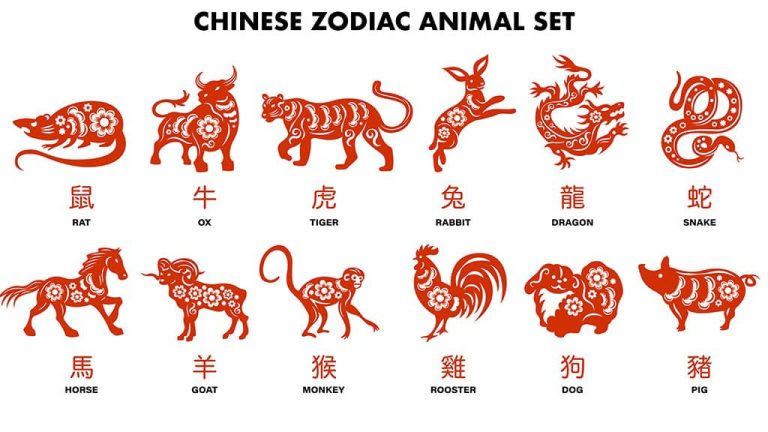
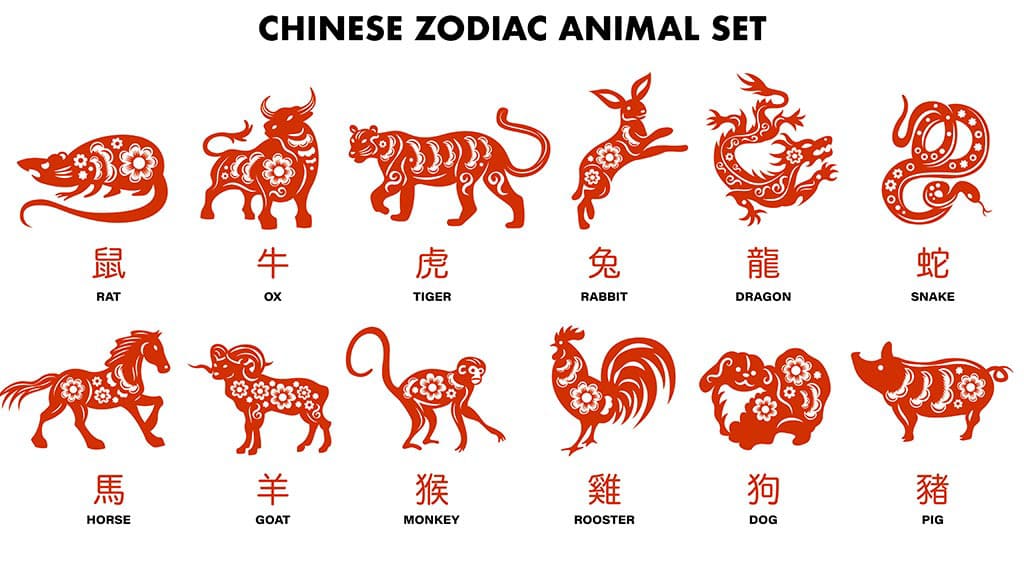
The calendar’s unique dating system is built on two interacting cycles: the Ten Heavenly Stems and the Twelve Earthly Branches. The Stems are connected to the Five Elements, each appearing in a Yin or Yang state. The Twelve Earthly Branches correspond to the familiar animals of the Chinese zodiac: Rat, Ox, Tiger, Rabbit, Dragon, Snake, Horse, Goat, Monkey, Rooster, Dog, and Pig. By combining one Stem with one Branch, a 60-year cycle (Jiazi) is created. This intricate system provides the framework for assigning a person’s zodiac sign and elemental birth chart, which are essential for detailed fate analysis.
🐲 Zodiac Calculator
Enter your birth year to discover your Chinese zodiac animal
Cultural Significance: Governing Festivals and Traditions
The Chinese lunar calendar is the heartbeat of traditional culture, dictating the timing of all major festivals. The most important, Chinese New Year, marks the transition to a new zodiac year—2026, for instance, will be the Year of the Horse. Other key festivals include the Lantern Festival, Dragon Boat Festival, and Mid-Autumn Festival, each falling on a specific lunar date and accompanied by unique customs, foods, and symbolic meanings. These celebrations are not arbitrary; they are carefully placed within the calendar to harness specific seasonal energies and astrological influences.
Practical Applications in Modern Life and Astrology
Beyond festivals, the calendar remains a vital tool for traditional practices. It is consulted for choosing auspicious dates for weddings, business openings, and moving house—a practice known as “Ze Ri” (Selecting a Day). In Chinese astrology and BaZi (Four Pillars of Destiny) analysis, a person’s exact birth data (year, month, day, hour) according to the lunar calendar is used to construct a personal destiny chart. This chart, which includes the zodiac sign and element of each pillar, offers insights into personality, potential, and life cycles, forming the basis for personalized daily guidance and horoscopes.
Common Misconceptions and Clarifications
A frequent point of confusion is calling it simply a “lunar” calendar. As a lunisolar system, it is fundamentally different from purely lunar calendars like the Islamic Hijri calendar. Another misconception is that the Chinese zodiac year changes on January 1st. It actually changes on Chinese New Year’s Day, which varies annually. Furthermore, while your Gregorian birthday remains fixed, your lunar birthday shifts each year, which is why it’s essential to use accurate conversion tools for precise astrological calculations.
🎲 Lucky Numbers
Get your fortune numbers for today
Integrating Lunar Calendar Wisdom Today
In our fast-paced, digitally-driven world, the Chinese lunar calendar offers a meaningful connection to natural cycles and ancestral wisdom. You don’t need to abandon the Gregorian calendar to benefit from its insights. Start by noting the major lunar festivals and observing their traditions. Check the lunar date for significant personal events, and explore what your own BaZi chart might reveal about your elemental balance and life path. Platforms like ChineseFate exist to bridge this ancient knowledge with contemporary seekers, providing authoritative resources that demystify the calendar’s complexities and highlight its enduring relevance for personal growth and cultural understanding.
Ultimately, the Chinese lunar calendar is a living testament to humanity’s quest to find order and meaning in the cosmos. It is a sophisticated cultural artifact that continues to inform, guide, and connect millions of people to their heritage and to the timeless rhythms of the universe.