Discover your Chinese zodiac and Chinese New Year、Chinese Calendar in this place

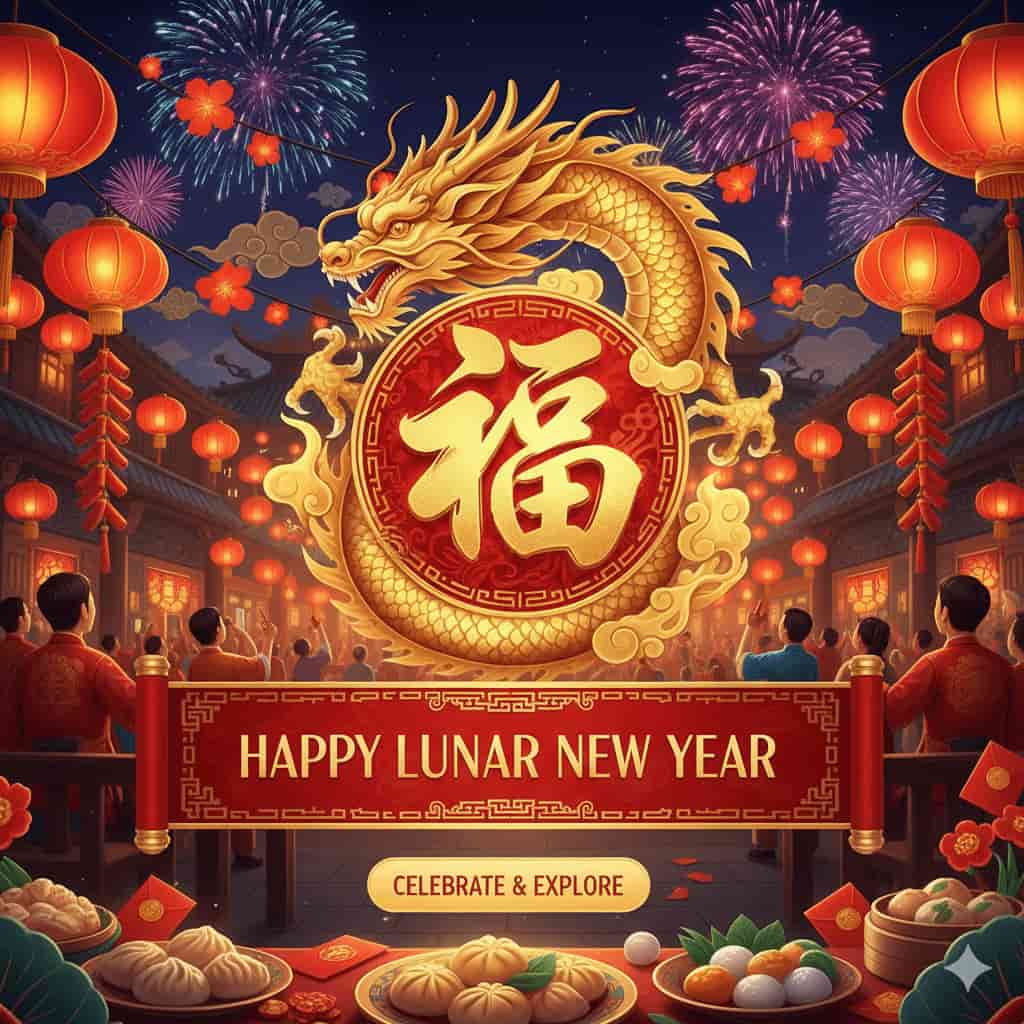
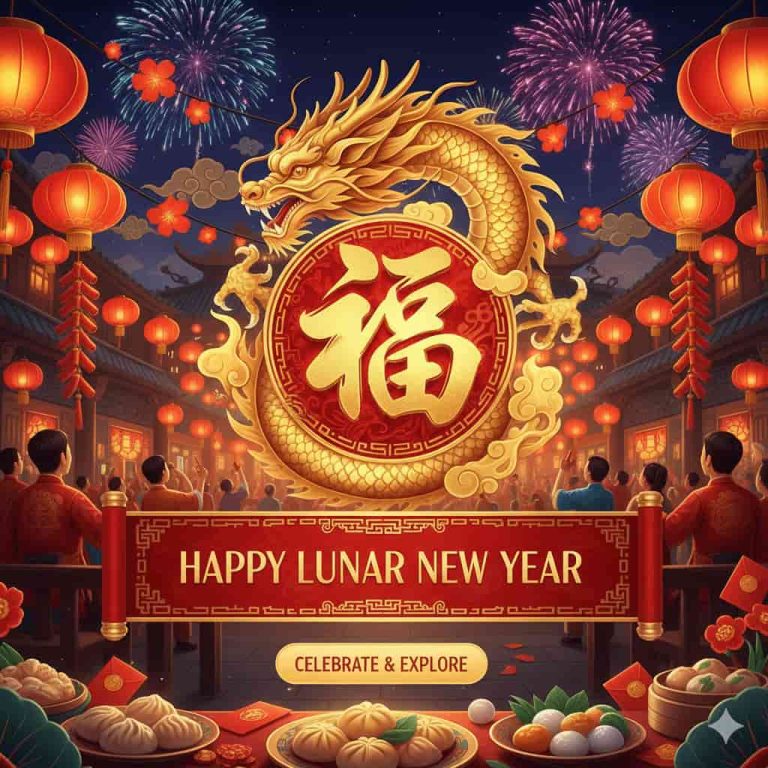
The Chinese New Year Dragon Dance is far more than a dazzling parade spectacle; it is a living, breathing narrative of cosmic power, communal harmony, and ancestral wisdom. Every undulating movement, the number of dancers, the dragon’s length, and even the chase for the “Pearl of Wisdom” are meticulously choreographed codes. These codes tell a story of taming primordial chaos, summoning life-giving rain and fortune, and uniting a community under a shared symbolic protector. To witness the dance is to see a millennia-old philosophy of balance, respect for nature, and collective aspiration performed in electrifying real-time.
This iconic performance transforms streets into rivers of silk and light, where the mythical dragon—a composite creature of nine animals—becomes a vessel for collective hope. Unlike its Western counterpart, the Chinese dragon is a benevolent celestial force, a master of water and weather, and an ultimate symbol of auspicious power, particularly potent in the Year of the Dragon. The dance is an active invocation of these qualities, a ritual to ensure the new lunar cycle begins under the most favorable conditions possible.
From Ancient Ritual to Modern Spectacle: A Historical Unfurling
The Dragon Dance’s origins are shrouded in the mists of ancient agricultural society, with roots tracing back over two thousand years. Initially, it was a shamanistic rain ceremony. During droughts, communities would create dragon effigies and parade them through fields and villages, accompanied by loud drums and firecrackers, to awaken the sleeping dragon of the clouds and plead for rainfall. The dragon’s sinuous movement was directly模仿 (mófǎng, imitate) the flowing of water and the rolling of thunderclouds.
By the Han Dynasty (206 BCE – 220 CE), the dance had been incorporated into imperial ceremonies to showcase power and bless the realm. The dragon, representing the emperor’s authority, became a symbol of the nation itself. Over centuries, it evolved from a purely religious rite into a folk celebration, especially around the Lunar New Year, or Spring Festival. It served as a communal exorcism, scaring away the bad luck of the old year (embodied by the mythical beast Nian) with its noise and vibrant energy, while ushering in prosperity.
Today, while the spiritual core remains, the dance is a global symbol of Chinese culture, performed from San Francisco to Sydney. It balances deep tradition with modern showmanship, featuring longer dragons, intricate acrobatics, and LED lighting, yet the fundamental symbolism—bringing yang energy, luck, and unity—is unchanged. It’s a powerful link in the chain of Lunar New Year traditions that define the season.
Mystic Dice Oracle
Roll the sacred dice to discover your fate
🎲
🎯
⭐
🌟
💫
🔮
🎲 Roll the Mystic Dice
Touch the dice to let fate decide your fortune
Consultations: 0
Dice Oracle
Consulting...
The mystic dice are rolling your fortune...
Please wait while the sacred dice reveal your destiny
Anatomy of a Celestial Beast: Decoding the Dragon’s Symbolic Parts
The Chinese dragon is not a random monster but a deliberate fusion of traits from nine revered animals, each contributing to its divine status and the dance’s meaning. Understanding its anatomy is key to reading the performance:
- Head (Camel): Symbolizes endurance and the ability to traverse long, difficult journeys—much like the path to prosperity.
- Eyes (Rabbit): Represent keen perception, vigilance, and the ability to see opportunities (and dangers) clearly in the coming year.
- Horns (Deer): Signify longevity, health, and a connection to the natural world.
- Ears (Cow): Denote patience, a willingness to listen, and agricultural abundance.
- Neck & Body (Snake): The source of the dragon’s famous flexibility and wisdom. The undulating body represents the flow of qi (vital energy) and the meandering, powerful course of a river.
- Belly (Clam): Associated with protection, self-sufficiency, and hidden treasures (like a pearl within a shell).
- Scales (Carp): Each of the 117 (or 81) scales represents a yang day in the solar year. They symbolize transformation (as the carp leaps over the Dragon Gate to become a dragon) and resilience.
- Paws (Tiger): Provide power, authority, and the courage to overcome obstacles.
- Claws (Eagle): Symbolize strength, decisiveness, and the ability to grasp good fortune.
This composite nature makes the dragon a universal sovereign, embodying the ultimate virtues of the animal kingdom and, by extension, the hopes of the human community that animates it.
The Choreography of Fortune: What Every Movement Means
The dance is a language without words. Each routine, though appearing spontaneous, follows traditional patterns with specific intentions. Here’s a glossary of common movements:
| Movement Name | Description | Symbolic Meaning |
|---|---|---|
| The Chase for the Pearl | The lead dancer waves a spherical object on a pole in front of the dragon’s head. | The “pearl” represents wisdom, truth, or the moon. The dragon’s pursuit symbolizes humanity’s eternal quest for knowledge, enlightenment, and the attainment of lofty goals. |
| Cloud Cave Exploration | The dragon weaves through a series of arches or under the bodies of other dancers. | Represents the dragon navigating the clouds and mists of the celestial realm, searching for sources of rain and hidden blessings. |
| Threading the Money | The dragon coils and uncoils in a spiral pattern around a central point. | Mimics the shape of ancient Chinese copper coins with a square hole. This is a direct invocation of wealth and financial prosperity coiling into the community. |
| Dragon Enters the Temple | The dragon performs a bowing or nodding motion towards a specific location (a business entrance, a temple). | A gesture of respect and a deliberate blessing. It is believed to leave a residue of auspicious qi at that spot, bringing it good fortune for the year. |
| Suppressing the Evil | Sudden, sharp, aggressive movements and loud roars from the drum. | Actively drives away lingering malevolent spirits or negative energy (sha qi), cleansing the space for the new year. |
The dance’s rhythm is dictated by a drum, gongs, and cymbals. The drumbeat is the dragon’s heartbeat—starting slow and majestic, building to a frenetic climax during chase sequences, and ending with powerful, punctuated beats to solidify the blessings. The overall flow from slow to fast mirrors the awakening of nature in spring, a core theme of the Chinese Spring Festival.
🎨 Lucky Colors
Colors that bring you luck today
Red
Blue
Gold
Green
Purple
Black
Numbers, Colors, and Elements: The Numerology of the Dance
In Chinese metaphysics, numbers and colors are never arbitrary. They carry vibrational meaning deeply tied to the principles of Chinese astrology and the Five Elements (Wu Xing). The dragon’s construction is a masterclass in this symbolic numerology.
| Feature | Common Number/Color | Symbolic Reason & Elemental Connection |
|---|---|---|
| Number of Sections | 9, 12, 24, or multiples of 9 | 9 is the ultimate yang number, associated with the emperor and eternity. 12 represents the earthly branches/zodiac animals. 24 symbolizes the solar terms of the lunar calendar. Odd numbers (yang) are preferred. |
| Number of Dancers | 9, 15, or more | Must be an odd number (yang) to generate active, expansive energy. More dancers mean a longer, more powerful dragon. |
| Dragon Length | Very long (e.g., 70+ meters) | Longer dragons are more prestigious and are believed to harness and distribute more auspicious qi over a wider area. |
| Color (Gold/Yellow) | Imperial power, wealth, earth element. | Represents the center, sovereignty, and material abundance. The classic choice for supreme fortune. |
| Color (Green) | Growth, health, renewal, wood element. | Invokes the energy of spring, new beginnings, and vitality. Excellent for businesses or community growth. |
| Color (Red) | Joy, luck, celebration, fire element, wards off evil. | The quintessential festival color. Its fiery energy excites the dragon’s spirit and protects the procession, much like the red envelopes given during New Year. |
| Color (Blue/Black) | Water element, depth, wisdom. | Connects to the dragon’s dominion over rain and rivers. Used to specifically invoke rainfall or scholarly success. |
The choice of color often aligns with the elemental theme of the specific lunar year. For instance, in a Year of the Fire Horse, red and gold dragons would be exceptionally potent to harmonize with the year’s dominant fire energy.
The Dragon vs. The Lion: A Tale of Two Dances
To the untrained eye, the Lion Dance and Dragon Dance might seem similar. However, they are distinct rituals with different origins, symbolism, and roles. Confusing them is like mixing up a knight and a king—both are noble, but their functions differ.
| Aspect | Dragon Dance | Lion Dance |
|---|---|---|
| Primary Symbol | Celestial, mythical dragon (sovereign power) | Earthly, albeit mythical, lion (guardian spirit) |
| Scope of Blessing | Communal, public, wide-area (whole street/town) | Focused, individual (specific business/household) |
| Number of Performers | Many (9+), operating as one unified body | Few (2 per lion), emphasizing partnership & skill |
| Key Action | Chasing the Pearl of Wisdom, undulating | “Cai Qing” (Picking the Greens), mimicking animal behavior |
| Typical Occasion | Large-scale festivals, New Year parades, national celebrations | Store openings, business launches, weddings, to ward off a specific evil |
| Metaphorical Role | The benevolent emperor bestowing general prosperity | The loyal guardian or lucky mascot solving a specific problem |
Think of it this way: The Dragon Dance is the headline act at the stadium concert for the whole city. The Lion Dance is the talented street performer you hire to bring a crowd specifically to your new shop’s doorstep. Both are essential to the festive ecosystem of the Lunar New Year.
Modern Interpretations and Global Resonance
Today, the Dragon Dance is not frozen in antiquity. It evolves while honoring its roots. Modern troupes incorporate breathtaking acrobatics—dancers leaping from poles, forming human pyramids for the dragon to traverse. Dragons now shimmer with LED lights for nighttime performances, and some even feature mechanized parts for smoke or eye illumination.
Its global spread has made it a potent symbol of diaspora identity and cross-cultural exchange. In multicultural cities, the dance is often a centerpiece of official New Year celebrations, educating new audiences about its depth. The core message of unity is universal: it takes perfect coordination and trust among all dancers to give life to the dragon. If one person stumbles, the entire creature falters. This is a powerful metaphor for community harmony, relevant in any society.
Furthermore, the dance’s themes of ecological balance—the dragon as master of life-giving water—resonate deeply in an era of climate awareness. It subtly reminds us of the ancient Chinese principle of living in harmonious balance with natural forces, a concept embedded in the Chinese zodiac’s connection to the natural world.
🐲 Zodiac Calculator
Enter your birth year to discover your Chinese zodiac animal
How to “Read” a Dragon Dance Like a Pro
Next time you witness a Dragon Dance, go beyond just watching the spectacle. Engage with its hidden language:
- Observe the Pearl: Is the dragon catching it? A successful catch symbolizes the community achieving its collective goals for the year.
- Feel the Rhythm: Listen to the percussion. The building intensity is not just for excitement; it’s the ritualistic raising of cosmic energy.
- Note the Path: Where does the dragon go? Its deliberate movements towards businesses or temples are targeted blessings. If it “bows” to the crowd, that blessing is for everyone present.
- Count the Sections: Try to count. An odd number confirms the tradition is being followed for maximum yang, active energy.
- Watch the Tail: The tail often sweeps the ground. This is said to sweep away the last remnants of old, stagnant energy, clearing the path for the new.
By understanding these elements, you transform from a passive spectator into an active participant in a centuries-old ritual of renewal, connecting you to the philosophical heart of celebrations like the Lantern Festival that culminates the New Year period.
Frequently Asked Questions (FAQ)
Q: Why do they use so many people to hold up the dragon?
A: The many dancers symbolize the many parts of a community coming together to create something greater than themselves—the unified body of the dragon. It physically demonstrates that collective effort and harmony are needed to manifest power and good fortune.
Q: What is the “Pearl” the dragon is always chasing, and can it ever catch it?
A: The pearl represents wisdom, enlightenment, or a lofty goal. In some performances, the dragon does catch and “swallow” the pearl, symbolizing the attainment of that wisdom and the internalization of cosmic energy. In others, the eternal chase represents the ongoing human pursuit of knowledge.
Q: Is it bad luck if the dragon falls or a dancer makes a mistake?
A: Traditionally, it’s considered a minor omen of disrupted energy, but not catastrophic. Skilled troupes train rigorously to prevent this. The focus is on the overall successful performance, which is believed to restore and amplify positive qi.
Q: Can anyone learn to perform the Dragon Dance?
A: Absolutely! While professional troupes require immense skill and training, many community centers and cultural associations offer classes. It’s celebrated as a form of cultural heritage, exercise, and team-building. The most important qualification is respect for the tradition.
Q: How does the Dragon Dance relate to my Chinese Zodiac sign?
A: The dragon is one of the 12 zodiac animals. During a Dragon Year, the dance is especially significant as it activates the energy of the ruling animal. Furthermore, the dance’s purpose—to bring balanced blessings—benefits all zodiac signs, not just those born in the Year of the Dragon.
The Chinese New Year Dragon Dance is a kinetic prayer, a communal sculpture, and a philosophical treatise set to the beat of a drum. Every swirl of its body writes a character of hope in the air; every chase after the pearl maps humanity’s timeless ambition. It reminds us that fortune is not a solitary pursuit but a collective creation, woven together by shared belief, coordinated effort, and the vibrant, unbroken thread of tradition. When you see the dragon weave through the streets, know that you are witnessing more than a show—you are seeing a culture dream its future into being, one powerful, undulating step at a time.