Discover your Chinese zodiac and Chinese New Year、Chinese Calendar in this place
Lunar Zodiac: The Ancient Chinese System That Maps Your Personality, Destiny, and the Flow of Time
For many in the West, the term “Lunar Zodiac” conjures images of placemats in Chinese restaurants, listing 12 animals with a few generic personality traits. You might know you’re a “Dragon” or a “Rabbit,” but the system often feels like a charming, simplistic curiosity—a cultural artifact with little practical depth. This perception, however, couldn’t be further from the truth. The true Lunar Zodiac, known in Chinese as Shēngxiào (生肖), is not merely a set of animal signs; it is a sophisticated, multi-layered philosophical framework that integrates astronomy, calendar science, elemental theory, and deep psychological observation. It is a system designed to map the interplay between cosmic cycles, earthly time, and human destiny. At ChineseFate, we approach this not as superstition, but as a rich cultural language for understanding patterns—in ourselves, our relationships, and our world.
This guide is crafted for the intellectually curious Western reader. We will move beyond the basic animal sign to explore the Lunar Zodiac as a complete system. You will discover how your birth year, month, day, and even hour create a unique elemental blueprint. We’ll draw parallels to systems you may already know, like Western astrology or the MBTI, not to prove one “right,” but to build bridges of understanding. By the end, you will see the Lunar Zodiac not as a fortune-telling gimmick, but as a timeless tool for introspection, relationship navigation, and aligning your life with natural rhythms.
🐲 Zodiac Calculator
Enter your birth year to discover your Chinese zodiac animal
Deconstructing the Misconception: It’s More Than Just Your Birth Year Animal
The most common entry point—and the greatest source of oversimplification—is the 12-year cycle of animals. While foundational, knowing you were born in a Rat year or a Horse year is akin to knowing only your Western sun sign. It offers a broad stroke, but misses the nuance. The full Lunar Zodiac system is built on four core pillars, often called the “Four Pillars of Destiny” or Bāzì (八字). These pillars correspond to the year, month, day, and hour of your birth, each represented by a specific Heavenly Stem and Earthly Branch (which contain the animal and element). This creates a matrix of interactions that defines your core personality, innate strengths, life challenges, and potential paths.
The 12 Earthly Branches: Your Animal Archetype
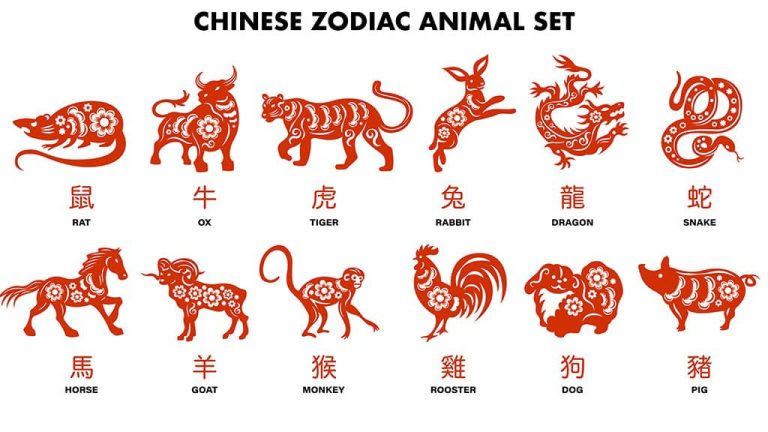
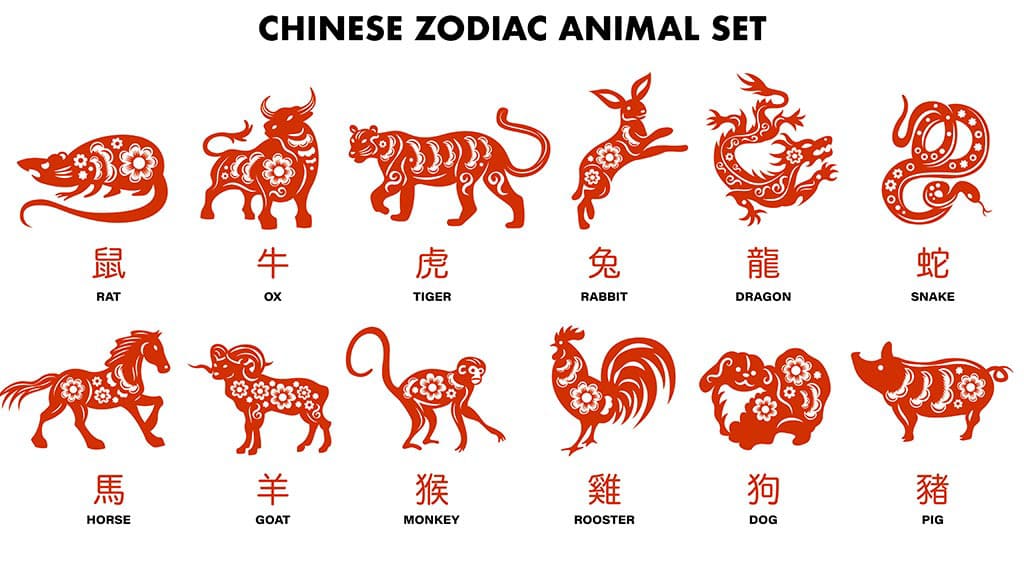
Let’s start with the familiar component: the 12 animals. Each animal is not a literal description but an archetype—a cluster of symbolic traits, behaviors, and energies. Their order, derived from an ancient legend, is believed to reflect a balance of yin and yang, and the interplay of odd and even. Understanding the archetype provides the first layer of self-knowledge.
| Animal | Yin/Yang | Fixed Element | Core Archetype & Energy | Modern Parallel (Analogy) |
|---|---|---|---|---|
| Rat (鼠) | Yang | Water | Quick-witted, resourceful, adaptable, charming but can be opportunistic. The survivor and opportunist. | The Entrepreneur / Strategist |
| Ox (牛) | Yin | Earth | Diligent, dependable, strong, methodical. Patient and unwavering. The bedrock. | The Master Craftsman / Foundation Builder |
| Tiger (虎) | Yang | Wood | Courageous, competitive, charismatic, rebellious. A natural leader driven by passion. | The Visionary Leader / Rebel |
| Rabbit (兔) | Yin | Wood | Gentle, empathetic, diplomatic, artistic. Seeks harmony and security. | The Diplomat / Peacemaker |
| Dragon (龍) | Yang | Earth | Ambitious, confident, innovative, lucky. Charismatic and destined for impact. | The Innovator / Icon |
| Snake (蛇) | Yin | Fire | Intuitive, wise, mysterious, deep. The philosopher and strategist who operates from the shadows. | The Philosopher / Analyst |
| Horse (馬) | Yang | Fire | Energetic, independent, free-spirited, adventurous. Craves freedom and movement. | The Adventurer / Free Agent |
| Goat (羊) | Yin | Earth | Creative, kind, sensitive, aesthetic. The artist and nurturer who values beauty. | The Artist / Caregiver |
| Monkey (猴) | Yang | Metal | Intelligent, witty, playful, inventive. The problem-solver and trickster. | The Inventor / Solutions Architect |
| Rooster (雞) | Yin | Metal | Observant, organized, honest, punctual. Takes pride in order and clarity. | The Editor / Systems Manager |
| Dog (狗) | Yang | Earth | Loyal, honest, responsible, protective. The faithful ally and ethical guardian. | The Loyalist / Ethical Guardian |
| Pig (豬) | Yin | Water | Generous, sincere, hedonistic, tolerant. Seeks pleasure, connection, and the good life. | The Philanthropist / Connector |
This table reveals the first layer of complexity: each animal has an inherent yin/yang quality and is permanently associated with one of the Five Elements (Wu Xing). A Yang Wood Tiger is fundamentally different from a Yin Wood Rabbit, despite sharing the Wood element. This begins to explain why two people born in the same “year of the Tiger” can have markedly different dispositions.
The Engine of Change: The Five Elements and the 60-Year Cycle
If the animals are the “actors,” the Five Elements (Wood, Fire, Earth, Metal, Water) are the “stage” and the “script.” They represent phases of energy, seasons, and transformational processes. Crucially, the element of your birth year is not fixed solely by your animal; it changes every year in a cycle. This is where the Lunar Zodiac transcends simple personality typing and becomes a dynamic system of time.
Each year is defined by a combination of a Heavenly Stem (Element + Yin/Yang) and an Earthly Branch (Animal). This creates a 60-year cycle (10 Stems x 12 Branches) before a specific combination repeats. For example, 2024 was the Year of the Wood Dragon (Jia Chen). The last Wood Dragon year was 1964, and the next will be 2084. A person born in 2024, 1964, and 1904 are all Wood Dragons, but the societal and global energies of those years are profoundly different, imprinting a unique generational signature.
| Gregorian Year | Lunar Zodiac Year | Heavenly Stem (Element/YinYang) | Earthly Branch (Animal) | Generational Energy Signature |
|---|---|---|---|---|
| 2020 | Geng Zi | Metal (Yang) | Rat | Metal Rat: Resilient, resourceful adaptation under pressure (pandemic era). |
| 2021 | Xin Chou | Metal (Yin) | Ox | Metal Ox: Steady, diligent rebuilding and foundational work. |
| 2022 | Ren Yin | Water (Yang) | Tiger | Water Tiger: Emotional, communicative courage and breaking old patterns. |
| 2023 | Gui Mao | Water (Yin) | Rabbit | Water Rabbit: Intuitive diplomacy, healing, and seeking emotional peace. |
| 2024 | Jia Chen | Wood (Yang) | Dragon | Wood Dragon: Expansive, growth-oriented innovation and bold new beginnings. |
| 2025 | Yi Si | Wood (Yin) | Snake | Wood Snake: Gentle, strategic growth through insight and adaptation. |
| 2026 | Bing Wu | Fire (Yang) | Horse | Fire Horse: A famously dynamic, passionate, and transformative year. Energy is high-speed, competitive, and revolutionary. |
This cyclical view offers a powerful lens for understanding generational cohorts. A “Fire Horse” (like 2026) is historically noted for its energetic, rebellious, and transformative spirit—individuals born in such years (e.g., 1966, 2026) often carry that spark. Similarly, a “Water Tiger” (2022) suggests a different flavor of courage than a “Wood Tiger” (1974). At ChineseFate, we analyze these cycles to provide context not just for individual fate, but for understanding the collective mood and challenges of a given time period.
📅 Daily Horoscope
Select your zodiac sign to get personalized predictions for today
♈
Aries
♉
Taurus
♊
Gemini
♋
Cancer
♌
Leo
♍
Virgo
♎
Libra
♏
Scorpio
♐
Sagittarius
♑
Capricorn
♒
Aquarius
♓
Pisces
A Practical Cross-Cultural Lens: Lunar Zodiac vs. Western Systems
To make the Lunar Zodiac’s utility clear, let’s position it alongside frameworks familiar to Western audiences. This isn’t about superiority, but about finding the right tool for the right question.
Lunar Zodiac vs. Western Astrology
Both systems seek to correlate celestial patterns with human affairs, but their approaches are distinct. Western astrology is primarily spatially oriented, based on the position of planets against constellations at a precise moment, creating an infinite number of potential charts. The Lunar Zodiac is fundamentally temporally oriented, based on the cycles of the moon, sun, and the sexagenary (60-year) calendar. It is more cyclical and generation-focused. A key difference lies in determinism: Western astrology often emphasizes planetary influences shaping personality, while traditional Chinese thought sees the Lunar Zodiac as a map of inherent tendencies present at birth, which interact with your choices and virtue (de 德) to shape outcome.
Lunar Zodiac as a Personality and Decision-Making Framework
For those who use tools like MBTI (Myers-Briggs) or the Big Five, the Lunar Zodiac offers a complementary, narrative-based model. An ESTP (The Entrepreneur) might find strong resonance with the Yang Fire Monkey energy: quick-thinking, adaptable, and hands-on. An INFJ (The Advocate) might align with the Yin Wood Rabbit or Water Snake: intuitive, idealistic, and seeking deep meaning. The value of the Lunar Zodiac here is its cultural narrative and its integration of elemental theory, which adds a layer of “energy dynamics” missing from static typologies.
In career and life planning, this becomes practical. A person with strong Metal (Rooster, Monkey) in their chart may excel in fields requiring precision, analysis, and structure—law, surgery, engineering, or programming. Someone with dominant Wood (Tiger, Rabbit) might thrive in growth-oriented, pioneering, or humanitarian fields—start-up leadership, environmental advocacy, or education. This isn’t about limiting choices, but about recognizing innate affinities that can lead to greater fulfillment and flow.
The Deep Logic of Compatibility: It’s Not Just “Dog and Rabbit Fight”
Compatibility is one of the most sought-after applications of the Lunar Zodiac. Pop culture reduces it to a few “good” and “bad” matches. The reality is a nuanced calculus based on several factors:
- Triadic Harmonies: Groups of four animals that form supportive triangles (e.g., Rat, Dragon, Monkey).
- Clashes: Pairs that are 180 degrees apart (e.g., Rat-Horse, Ox-Goat) representing fundamental opposition.
- Elemental Interactions: The productive and destructive cycles of the Five Elements (Wood fuels Fire, Fire creates Earth, Earth bears Metal, Metal collects Water, Water nourishes Wood; Wood parts Earth, Earth dams Water, Water extinguishes Fire, Fire melts Metal, Metal chops Wood).
- Four Pillars Analysis: The full chart comparison, which can show that while year animals may clash, the month, day, and hour pillars create strong bonds.
A classic “clash” like Rat and Horse (opposite energies) isn’t a prediction of doom. It indicates a relationship that will require significant work to balance opposing needs—the Rat’s desire for security and strategy vs. the Horse’s need for freedom and spontaneity. Often, such pairs can achieve remarkable growth by integrating the other’s strengths. Conversely, a “harmony” pair can become complacent. The system diagnoses the natural energetic flow, not the final outcome, which always depends on conscious effort.
🎲 Lucky Numbers
Get your fortune numbers for today
The Lunar Zodiac in Modern Life: A Tool for Introspection and Timing
How can a modern, skeptical Westerner use this system meaningfully? The key is to shift from “What does my sign predict?” to “What does my sign reveal about my inherent patterns?” and “How do I align with cyclical time?”
For Personal Growth:
Identify your dominant element and animal archetype. Are you a Fire Horse constantly burning out by taking on too much? Understanding your innate drive for independence and speed can help you design a life with built-in “pastures” for rest. Are you an Earth Ox feeling stuck in a rut? Your strength is endurance, but the Ox must sometimes be guided to see new fields to plow. The Zodiac acts as a mirror for blind spots and untapped potential.
For Relationships:
Use compatibility as a diagnostic tool, not a verdict. If you and your partner are in a “clash” combination, proactively discuss the core tension point. A Dog (loyal, dutiful) paired with a Dragon (ambitious, unconventional) can succeed if the Dog learns to support the Dragon’s visions without feeling neglected, and the Dragon learns to acknowledge the Dog’s steadfast loyalty.
For Timing and Decisions:
The Lunar Zodiac is deeply woven into the Chinese calendar. Traditional practices consider the annual and monthly animal/element influences when planning major events. Starting a new business in a year that clashes with your sign’s element might suggest extra preparation. Embarking on a creative project during a month aligned with your “birth month element” might feel more fluid. It’s a framework for seeking harmony with time’s flow, much like a farmer plants according to the seasons.
Beyond the Individual: The Lunar Zodiac as Cultural Code
The Lunar Zodiac permeates Chinese and East Asian culture in ways that go far beyond personal fate. It is a shared symbolic language. It influences naming conventions, architecture (avoiding inauspicious directions in a given year), literature, and even humor. The Zodiac provides a collective rhythm to life, with each year bringing a distinct cultural mood. The coming of a Dragon year is met with heightened expectations for births and new ventures, while a Goat year might be associated with a focus on arts and family. Understanding this code offers deep insight into the collective psyche and social behavior during events like the Chinese New Year.
Conclusion: Your Invitation to a Deeper Dialogue
The Lunar Zodiac is not a simplistic horoscope to be glanced at and forgotten. It is a profound, centuries-old system for modeling the dynamic relationship between heaven, earth, and humanity. It offers a unique lens—one that is cyclical, elemental, and deeply narrative. For the Western seeker, it provides a fresh vocabulary for self-discovery, a new logic for understanding relationships, and a timeless reminder that we are part of larger, repeating patterns.
Your journey into this wisdom begins with your basic animal sign but certainly doesn’t end there. We invite you to explore the deeper layers of your own celestial blueprint. What is the element of your birth year? What might your month pillar (which relates to your inner self and young adulthood) reveal? How do the cycles of the current year interact with your personal chart?
At ChineseFate, our mission is to make this intricate cultural knowledge accessible and applicable. We provide the tools and context for you to engage with the Lunar Zodiac not as passive consumers of predictions, but as active participants in a conversation with time, destiny, and your own inherent nature. Begin your exploration today—discover the layers of your sign, learn about the powerful Fire Horse year of 2026, and see how this ancient system can bring new clarity to your modern life.